














 Login
Login
 Cart
Cart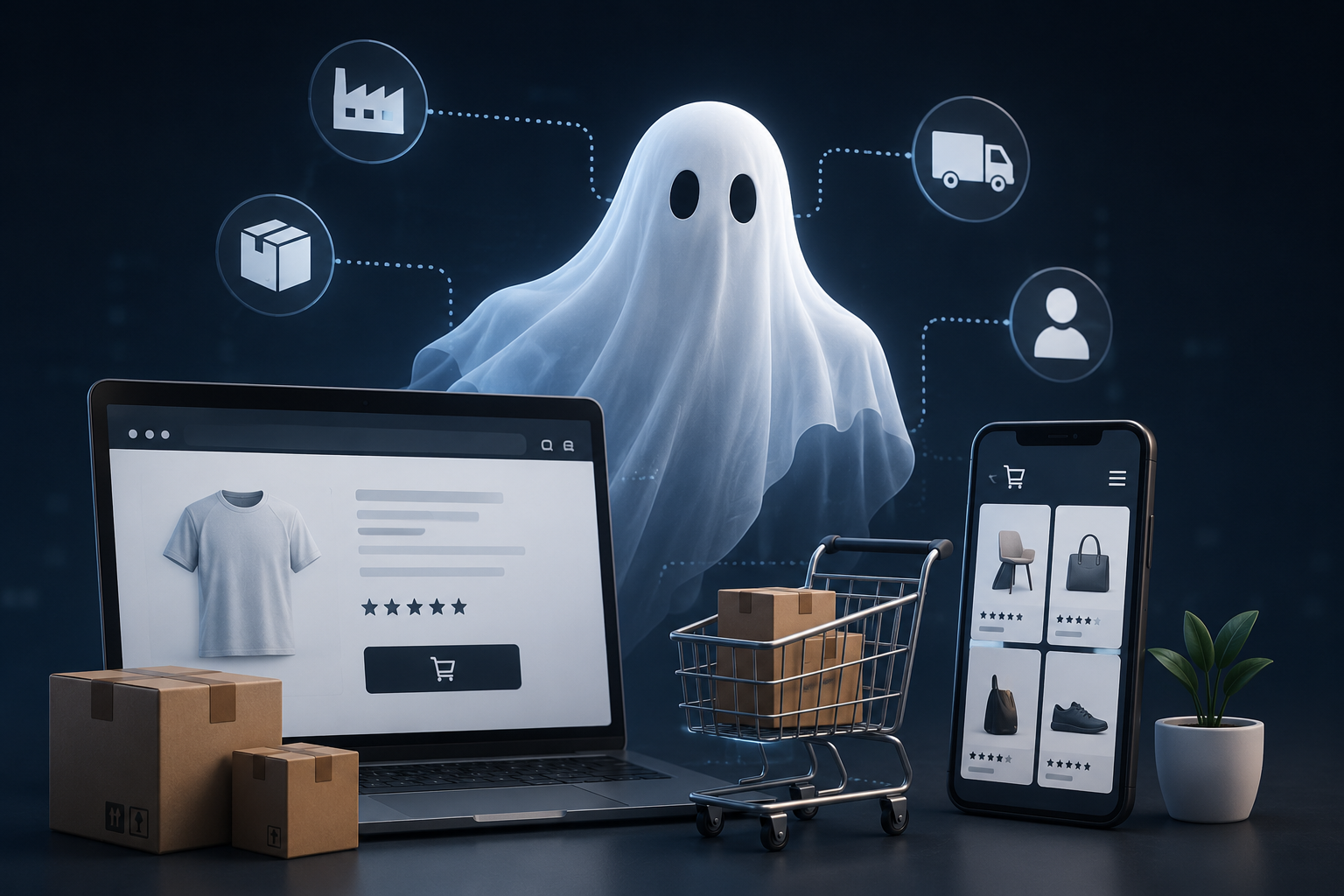
Imagine earning money online without creating products, managing inventory, or handling customer support. That’s exactly why ghost commerce has become one of the fastest-growing online business models in 2026. Ghost commerce represents a sophisticated approach to online selling where entrepreneurs create revenue streams primarily through affiliate marketing and content monetization, rather than owning and shipping physical products. The term “ghost” doesn’t refer to anything mysterious , it simply means the store owner remains invisible to the end customer, facilitating transactions between customers and established brands. This model has evolved significantly since its early days, now incorporating sophisticated content strategies, SEO expertise, and diversified revenue channels. For those exploring online business opportunities in 2026, understanding ghost commerce is essential.
What Is Ghost Commerce? Definition and Revenue Flow
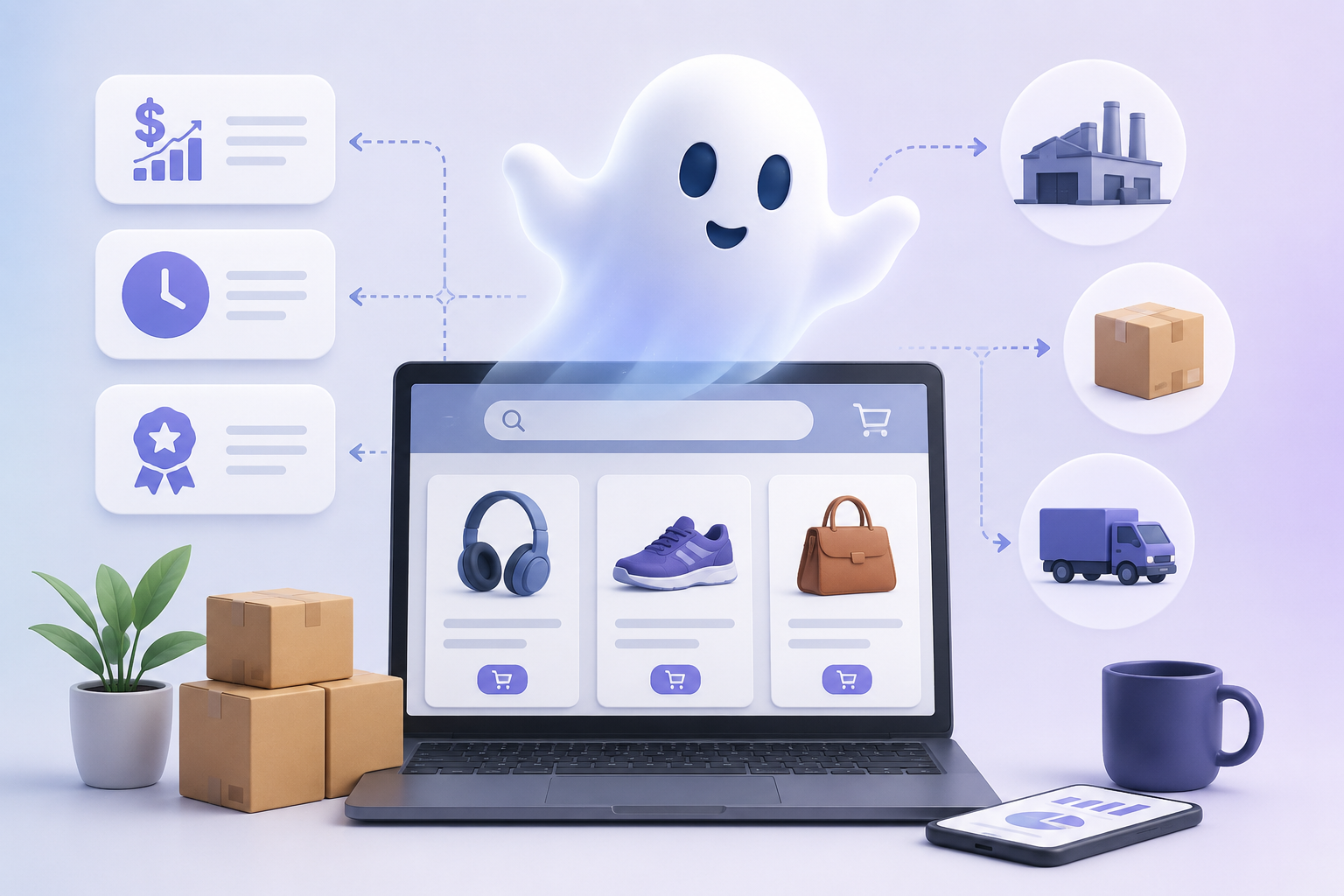
A ghost commerce business operates under an eCommerce model whereby an entity can create an online presence and promote products and services without having to own the stock of goods or fulfill customer orders. The way that a ghost commerce business earns revenue is by providing potential customers with recommendations and links to purchase the products and services, whether that is through affiliate links, content marketing, social media, email marketing or other types of digital marketing. This model sits within a fast-growing industry – the global affiliate marketing sector, which powers much of ghost commerce, was valued at $18.5B in 2026 and is projected to reach $27.78B by 2027 and $38.35B by 2030, growing at a 15.2% CAGR. To put it simply, ghost commerce allows you to sell without the selling part of selling. As a middle-man between manufacturers and customers, the supplier takes care of inventory, packaging, shipping, and answering customer inquiries.
The revenue flow works like this:
- Customer discovers content: A potential buyer finds the entrepreneur’s blog post, product review, or recommendation through search engines, social media, or direct traffic
- Customer clicks affiliate link: The content includes a uniquely tracked affiliate link to a product or service
- Purchase is completed: The customer buys through the partner merchant’s platform (Amazon, Shopify, SaaS platforms, etc.)
- Commission is earned: The entrepreneur receives a predetermined commission percentage or flat fee for the referral
- Repeat and scale: As content ranks higher and attracts more traffic, commissions compound with minimal ongoing operational costs
Unlike dropshipping, ghost commerce requires zero inventory concerns. Unlike creating software, it doesn’t require ongoing technical development. Unlike building a personal brand as an influencer, it works independently of follower counts or social media algorithms.
Marketing Channels Powering Ghost Commerce
Successful ghost commerce operators don’t rely on a single channel. In 2026, the most effective practitioners diversify across multiple touchpoints.
- Search Engine Optimization (SEO): remains foundational. Creating in-depth, authoritative content targeting keywords like “best project management software for startups” or “how to choose an eCommerce platform” attracts intent-driven traffic. A single well-ranking article can generate ongoing passive revenue for months or years.
- Affiliate Marketing Networks; like Amazon Associates, ShareASale, CJ Affiliate, and specialized affiliate programs (Shopify partners, software tool referral programs) provide the infrastructure. Ghost commerce operators build relationships directly with brands to negotiate better commission structures than public programs offer. Pairing these networks with the right supporting channels pays off too – affiliates using email marketing earn 66.4% more than those who don’t, making it one of the highest-leverage additions to a ghost commerce operator’s toolkit.
- Content Marketing: extends beyond SEO. Email newsletters, comparison guides, detailed reviews, and tutorials establish authority and trust. A ghost commerce entrepreneur publishing weekly content builds an audience that increasingly trusts their recommendations.
- Social Media and Community: drive awareness and engagement. Platforms like TikTok, YouTube, Instagram, and Reddit allow ghost commerce operators to share insights, create short-form product reviews, answer questions in niche communities, and build parasocial relationships that drive traffic to their content hubs.
- Email Marketing: converts casual visitors into repeat customers of recommendations. Building an email list allows operators to send targeted product recommendations, seasonal guides, and affiliate promotions directly to interested subscribers, bypassing algorithmic limitations.
- Influencer Collaboration: (micro-influencer partnerships) accelerates reach. Rather than becoming influencers themselves, ghost commerce operators partner with niche content creators, offering commission-sharing arrangements to expand audience reach and validate recommendations through trusted voices.
This model has been gaining traction recently because of its low start-up costs and its ability to provide freedom and flexibility to people who are new to the marketing game and to those who are more seasoned marketers.
The Ghost Commerce Step-by-Step Process
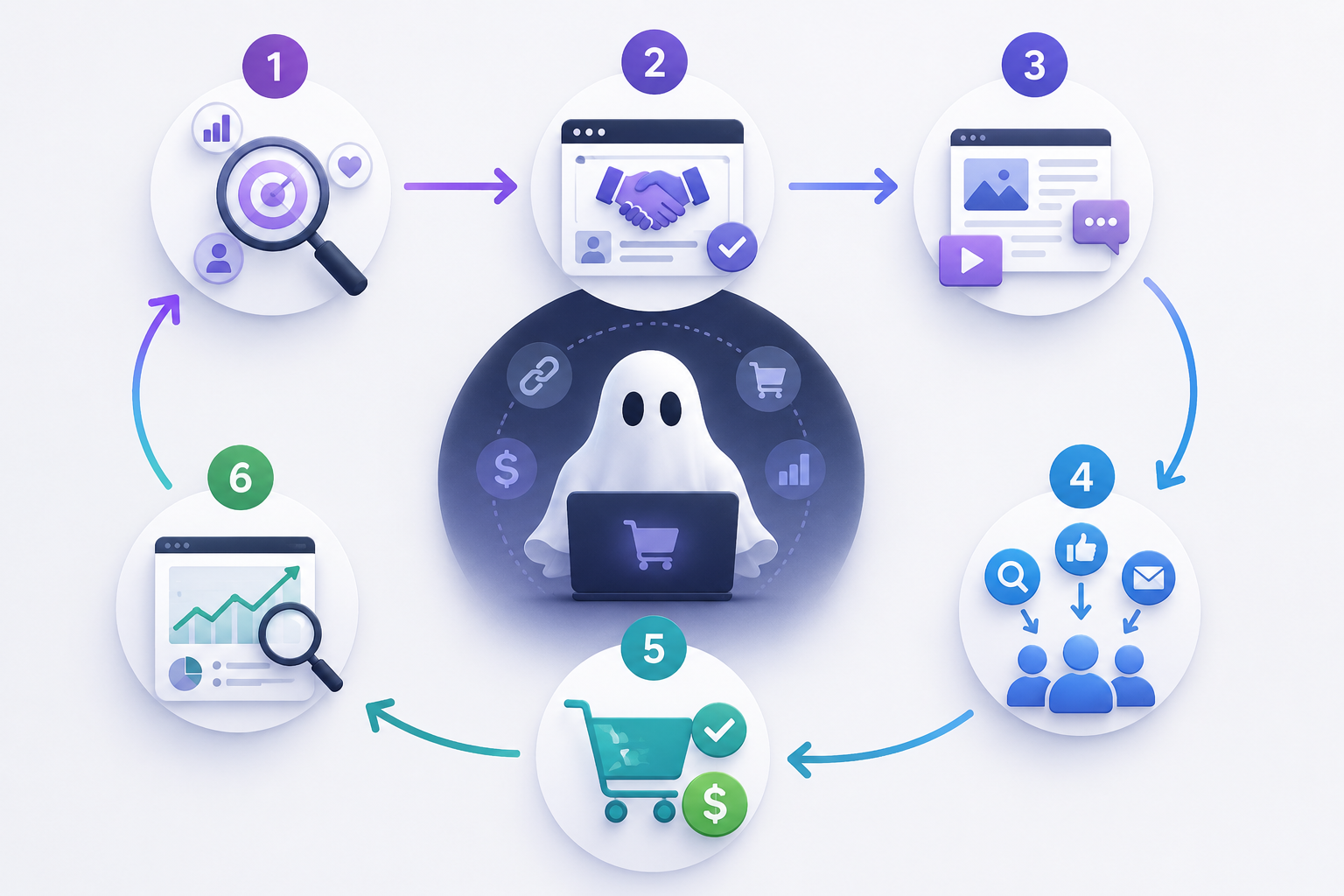
Step 1: Niche Selection
Successful ghost commerce begins with niche selection. Rather than attempting to recommend everything, operators choose a specific market segment: “eco-friendly home goods for young parents,” “project management tools for remote design teams.” The niche must satisfy three criteria: sufficient demand to attract regular searches, passionate audiences willing to spend money, and affiliate programs with reasonable commissions.
Step 2: Join Relevant Affiliate Programs
Once the niche is defined, the operator identifies affiliate programs serving that market. This might include brand-specific programs (Shopify store owners, SaaS companies, Amazon Associates) and affiliate networks like CJ Affiliate or Impact that host programs across multiple brands. The best programs offer 15-30% commissions and provide marketing materials, tracking dashboards, and responsive affiliate support.
Step 3: Create Authority-Building Content
Content is the cornerstone. A ghost commerce operator might create:
- Comprehensive buying guides (5,000+ words comparing five categories within the niche)
- Detailed product reviews (thoroughly testing products and documenting real experiences)
- How-to tutorials (solving problems that necessitate the recommended solution)
- Comparison articles (vs. traditional solutions, alternative approaches, or competing products)
- The goal is consistently answering questions the target audience asks,naturally incorporating affiliate links where relevant.
Step 4: Drive Targeted Traffic
With content created, traffic generation follows multiple pathways. SEO optimization ensures search engines rank the content for commercial intent keywords. Social media teases content and drives referral traffic. Email marketing promotes new guides to existing subscribers. Paid search (Google Ads, Pinterest promoted pins) accelerates growth during optimization.
Step 5: Generate Sales and Maximize Conversion
Conversion optimization matters intensely. Even small improvements, clearer calls-to-action, better link placement, adding social proof through user reviews, meaningfully impact revenue. Ghost commerce operators test different content layouts, calls-to-action timing, and content angles to identify highest-converting approaches.
Step 6: Track Performance and Optimize
Tracking is essential. Most affiliate programs provide dashboards showing clicks, conversions, and commissions by source. Successful operators monitor:
- Which content pieces drive the most revenue
- Keywords that convert best
- Which traffic sources yield the highest commission value
- Which products generate repeat purchases
- This data informs content strategy going forward, ensuring resources focus on highest-ROI activities.
Benefits of Ghost Commerce
1. Low Start Up Costs
Ghost Commerce is an online business model that allows you to grow your business with little expense. Compared to other forms of business, like brick-and-mortar stores, ghost commerce doesn’t require you to invest in inventory, storage, real estate, or storefronts, so you can launch your business using only a small amount of money. Instead, ghost commerce requires you to spend money on a domain, hosting for your website, or basic marketing tools while relying on suppliers for products and shipping. This low-cost structure is a big part of why the space is expanding so fast – the global dropshipping market, a core ghost commerce model, hit $543.53B in 2026 (about 6.5% of all ecommerce) and is projected to cross $1.25T by 2030. Using social media or blogging, your business can also be done with little or no cost to you, making it a great choice for new entrepreneurs who want to start an online business with little financial risk.
2. No Inventory Management
You no longer have any responsibility for manufacturing, maintaining, or shipping products through ghost commerce; instead, all management of inventory or order processes lies with suppliers. By relieving yourself of the burden of daily operations, such as packaging and delivery, you can concentrate on creating quality content and promoting it, building up your audience, and developing a following while leaving behind the desire to operate your daily business as a ‘warehouse’ by freeing yourself from the pains associated with carrying and selling stock. By eliminating your responsibility for inventory, your business becomes less risky (you no longer have to purchase any items until they’ve been sold), and your ease of managing your business increases.
3. Flexible Work Schedule
Ghost commerce allows you to work from nearly anywhere, provided you have an internet-enabled computer with a stable connection. You can manage your business from inside one of your own offices (home), while traveling, or even from an internet café, all on your own timetable. You will not be limited by standard office hours, so you can choose to work full-time, part-time, or in conjunction with another job. Because of this flexibility, ghost commerce has become a popular choice for students, freelancers, stay-at-home parents, and anyone who wants to generate revenue while also enjoying a good work-life balance.
4. Scalable Business Model
Ghost commerce is one of the most appealing forms of commerce for many people because of how much it can be scaled. You can grow your business without increasing your costs by using higher amounts of website visitors, social media followers, and email subscribers. You can also publish more content or promote more products to grow your business, as well as enter into new niches, because you are outsourcing your customer service and product fulfillment through suppliers. With low operating expenses and a steady increase in your business, growing long-term passive income through ghost commerce will come easily.
5. Multiple Streams of Income
Ghost commerce provides various ways to earn money and provides you with options in comparison to relying solely on one product/brand as the source of income. Examples include, but are not limited to: promoting products you sell through multiple affiliate programs; recommending digital products you don’t manufacture yourself; forming partnerships with the brands you promote; and monetizing your own material through advertising or sponsorship.
Diversifying your income streams from ghost commerce reduces your financial risk and provides many ways for you to earn. As your audience grows, you can continue to work with new partners and revenue sources, thereby increasing your overall revenue and creating a more steady and sustainable online business.
Challenges Ghost Commerce Operators Face

1. Intense Competition
By 2026, ghost commerce has matured significantly. Competitive keywords in popular niches (home office furniture, best software tools, fitness equipment reviews) feature pages from established media brands with substantial SEO resources and brand authority. Competing requires either exceptional content quality, innovative content angles, or targeting less-competitive long-tail keywords where volume is lower but conversion rates are higher.
2. Building Genuine Trust and Authority
Affiliate marketing carries a trust burden. Many audiences are skeptical of recommendations, especially with rampant affiliate content. Operators must demonstrate genuine product experience, disclose affiliate relationships transparently, and prioritize audience benefit over commission maximization. Building real authority takes time, typically 12-24 months before traction becomes obvious.
3. Steep SEO Learning Curve
Ranking content consistently requires an understanding of on-page and technical SEO, keyword research, link-building strategies, and how search algorithms evolve. 2026’s SEO landscape increasingly rewards comprehensive, original research and user experience signals, making it more complex than simple keyword matching.
4. Traffic Generation Complexity
Early-stage operators struggle with traffic generation. Before ranking in search engines, driving meaningful traffic requires social media growth, paid advertising investment, or leveraging existing audiences. This problem frustrates many beginners who expect immediate results.
5. Affiliate Program Volatility
Programs change policies, reduce commissions, or shut down entirely. Amazon Associates might reduce payouts in a particular category. A SaaS company might slash affiliate commissions from 30% to 10%. Operators building revenue on a single program face significant risk, which is why diversification matters.
Real World Ghost Commerce Examples
Project Management Tool Comparison Site
Sarah spent 15 years in project management before starting a comparison site reviewing tools for distributed teams. She created detailed guides comparing Asana, Monday.com, Notion, and Basecamp across 20 different criteria. Her content ranked for high-intent keywords like “best project management tool for remote teams” and “Asana vs Monday comparison,” capturing customers actively evaluating purchases. Through software affiliate programs offering 20-30% recurring revenue, her site generates $8,000+ monthly, and she works fewer than 20 hours weekly maintaining content.
Eco-Conscious Product Reviewer
Marcus built a YouTube channel and a complementary blog reviewing sustainable home products. His detailed reviews (testing products over weeks, documenting realistic experiences) attract environmentally conscious consumers evaluating sustainable alternatives. Through Amazon Associates, brand affiliate programs, and sponsored content partnerships with eco-friendly brands, his multi-channel approach generates $15,000 monthly with significant revenue growth year-over-year.
Fitness Equipment Niche Operator
Jennifer operated a small fitness studio but transitioned to remote consulting. Rather than limiting her impact to local clients, she created comprehensive equipment guides, home gym setup articles, and video reviews targeting people transforming their homes into workout spaces. Through Amazon Associates, affiliate programs from fitness equipment manufacturers, and selling her own home workout programs, she built a six-figure affiliate business requiring only 10 hours weekly.
| Factor | Ghost Commerce | Traditional E-Commerce | Dropshipping |
| Startup Cost | $50–500 | $5,000–50,000+ | $1,000–10,000 |
| Inventory Management | None | Full responsibility | Outsourced but managed |
| Customer Service | None | Full responsibility | Partial involvement |
| Time to Profitability | 12–24 months | 6–18 months | 3–12 months |
| Revenue Scaling | Passive (content ranks) | Active (operational) | Active (marketing) |
| Profit Margins | 5–50% commission | 50–90% per sale | 20–50% per sale |
| Branding | Owned by operator | Owned by operator | Limited brand control |
| Risk Level | Medium (trust, algorithm changes) | High (inventory, competition) | Medium (supplier reliability) |
The Bridge to Building Your Own Store: WooCommerce and Beyond
Many successful ghost commerce operators reach an inflection point: they’ve built authority, accumulated audience trust, and identified products their audience needs, but they’re funneling revenue through others’ platforms. This creates an opportunity.
From Ghost Commerce to Branded Commerce
The natural evolution involves launching your own WooCommerce store. Rather than only recommending others’ products, you can:
- Build branded products using dropshipping or white-labeling while leveraging audience trust
- Create complementary offerings (courses, tools, membership communities) alongside affiliate commissions
- Capture higher margins on directly-sold products versus affiliate commissions
- Develop sticky customer relationships through direct ownership rather than referral-only interactions
For operators in this evolution phase, tools like Woocommerce Checkout Field Editor allow sophisticated customization of purchase experiences. Woocommerce Product Labels let you organize and recommend products effectively to growing customer bases. WooCommerce Dynamic Pricing enables sophisticated pricing strategies as volume scales.
Ghost Commerce Vs Affiliate Marketing

Many people think ghost commerce and affiliate marketing are interchangeable, but they’re different.
Affiliate marketing is one strategy that falls under the umbrella of ghost commerce. Ghost commerce is a larger business model, which means there are more ways to promote a product digitally beyond just using affiliate marketing, such as through content creation or influencer partnerships.
| Model | Revenue Source | Key Skills | Time Investment | Scalability |
| Content + Affiliate | Affiliate commissions | Writing, SEO, copywriting | 15–30 hrs/week | High |
| Influencer + Affiliate | Sponsorships + affiliate | Social content creation | 10–20 hrs/week | Medium–High |
| YouTube Reviews | Ad revenue + affiliate | Video production | 20–40 hrs/week | Medium |
| Email List Monetization | Direct affiliate to list | Email marketing, list building | 10–15 hrs/week | Medium |
| Hybrid (Content + Digital Products) | Affiliate + own products | Content + course creation | 30–50 hrs/week | High |
Ghost Commerce and Related Models
Ghost Marketplace Explained
A ghost market or marketplace is an internet-based platform or ecosystem for connecting customers with products through a creator, marketer, and/or business who provides them with the ability to purchase without any type of inventory or fulfillment. The term ghost marketplace is not a recognized term in the industry; however, it has become synonymous with marketplaces that promote commerce via affiliates and/or creators.
Ghost Advertising Explained
Ghost advertising is a type of advertising in which the creator and/or publisher promotes products via websites, videos, social media, or email, but does not sell products as a direct seller. The primary goal of ghost advertising is to provide consumers with a product that will aid in their purchasing decision through the use of valuable content and/or authentic recommendations.
Ghost Company vs. Ghost Commerce
A ghost company is not a ghost commerce company. A ghost company is an actual company (registered) that has little to no employees, operations, or physical presence, but was created as a legally registered entity. Ghost commerce is a type of business model operated exclusively on the internet, where the promoter uses digital advertising to promote products and earns a commission on each sale.
Understanding the difference between the two concepts is important in order to eliminate confusion.
Essential Compliance: FTC Guidelines and Transparent Disclosure
A critical element often overlooked by newcomers: the Federal Trade Commission (FTC) requires clear, conspicuous disclosure of affiliate relationships. The FTC’s revised 2023 Endorsement Guides (16 CFR Part 255) make clear that any content with an affiliate link needs disclosure in or before that content – regardless of commission size or follower count. The language should appear before the affiliate link, not buried in footer disclaimers. Examples include:
- “I earn a commission if you click this link and make a purchase”
- “This post contains affiliate links. I may earn a small commission if you use these links”
- Using disclosure plugins that automatically flag affiliate content
Non-compliance creates legal liability. The FTC has fined major websites and influencers for inadequate disclosure. Beyond legal requirements, transparent disclosure actually builds trust,and audiences respect operators who are honest about monetization.
Is Ghost Commerce Credible?
Yes! Ghost commerce is a valid online business model that can help you make money by promoting various products for other people and companies through affiliate partnerships, and many bloggers, influencers, and content creators have achieved success with this method.
Now keep in mind that ghost commerce is not going to allow you to get rich overnight; in order to build a sustainable business, you will need to create high-quality content, build the trust of your audience, and implement effective marketing campaigns.
Conclusion
Ghost commerce is revolutionising the way we operate our online businesses in previously impossible ways; removing the need for stock keeping, shipping of goods, or creating products are all now possible! So, if you have been asking yourself, ‘what’s ghost commerce?’ then this business model could be a great way to earn a good living through your content creation and digital marketing efforts. Once you understand what ghost commerce means, how it is different from a ghost company, and how to use strategies such as ghost advertising in a ghost marketplace to develop an ongoing profitable online business, by providing great content, developing excellent SEO, and establishing a trustworthy relationship with your audience, you will find success in the burgeoning world of ghost commerce!
Acowebs are the developers of WooCommerce Product Options, which is an optimized, lightweight, and fruitful plugin that is simply the best to add extra product options using its custom form builder easily. WooCommerce custom fields also come with a drag-and-drop form builder, 22+ field types, and a custom price formula.
Ghost commerce is an online business model where you promote and sell other companies’ products -through affiliate links, content, or social media – without ever owning inventory, handling shipping, or being visible as the seller. You earn commission; the supplier or brand handles fulfillment.
Most operators see meaningful income after 12–24 months of consistent content and SEO work, though social-first approaches on TikTok or YouTube can generate early sales faster than SEO-driven traffic.
No. Dropshipping is one type of ghost commerce where you run your own branded store and outsource fulfillment. Ghost commerce is the broader umbrella that also includes affiliate marketing, print-on-demand, and digital reselling – models where you may not run a store at all.
No. You can start on social platforms like TikTok, YouTube, or Instagram. A website improves long-term SEO value and gives you more control, but it isn’t required to begin.